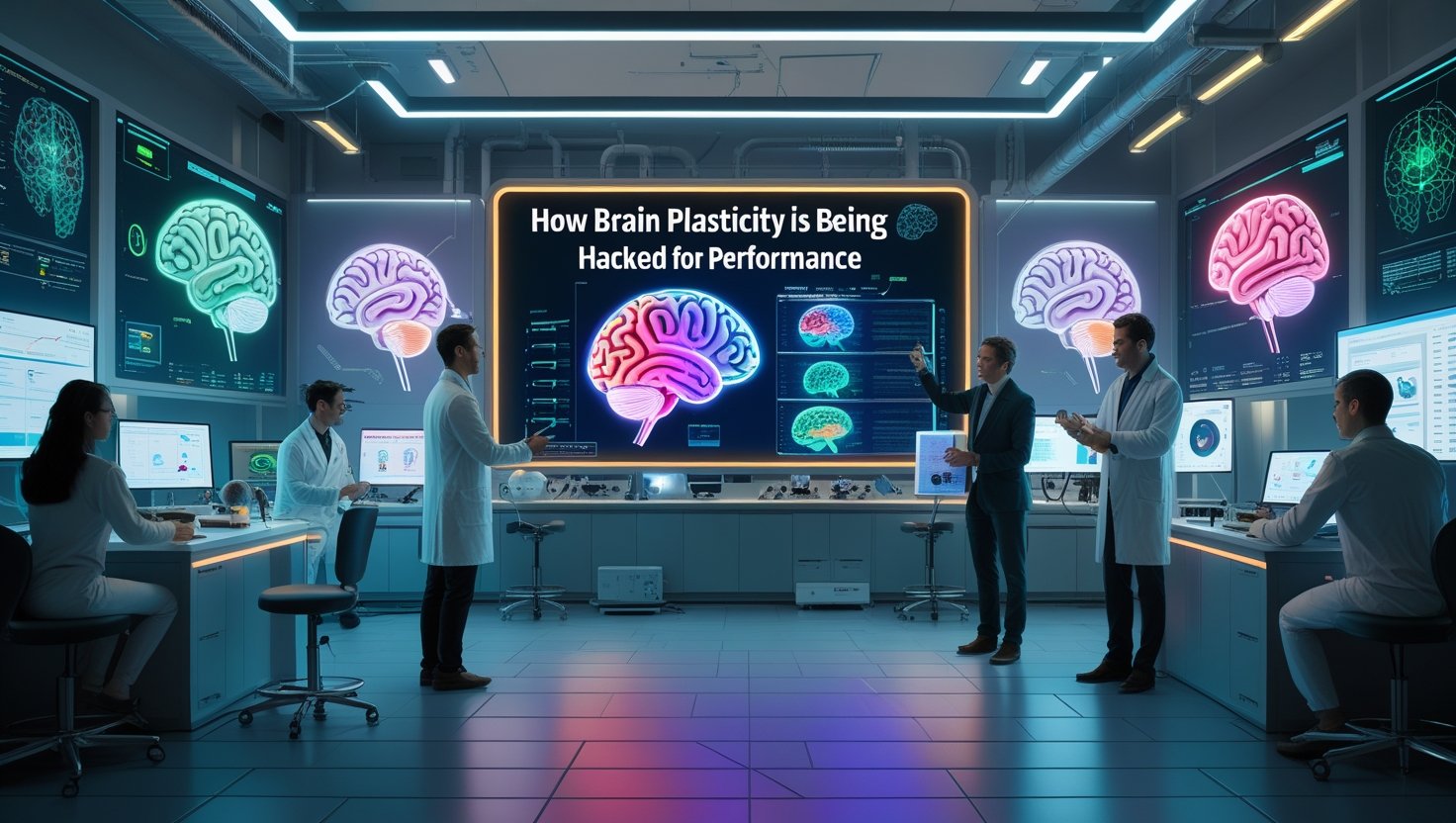
Nowadays, boosting mental performance is not just a luxury but has become a necessity, and the secret of this is hidden in brain plasticity, which is the ability of the human brain through which it adapts itself according to new experiences and information. Earlier, this concept was only used in cases of brain injury or stroke recovery, but now scientists and performance experts are finding ways to hack it so that healthy people can also unlock the full potential of their brains. This is a new era where only physical fitness is not enough, but cognitive fitness has also become equally important.
This is why people are starting to understand brain plasticity, and to boost its performance, new tools and methods are being adopted, like meditation, brain training apps, and even neuro-tech devices. People want their focus to be sharp, their memory to be strong, and they can generate creative ideas. All this seems possible now that we learn to train the brain. In this blog, we will see what brain plasticity is.
What are the popular ways to hack it?
Who are the people using it, and whether it can have any disadvantages? Eventually, we will know whether this trend is just a fad or it is going to become the foundation of future human performance.
Understanding Brain Plasticity:
Brain plasticity, or neuroplasticity, is a scientific term that describes how the human brain changes its structure and functioning according to new experiences and the environment. When we learn something new or go through a difficult situation, the brain makes new neural connections and updates old pathways. This process continues at every age but is most active during childhood. This means that our brain is not static; it is dynamic, and our daily habits, way of thinking, and environment influence the structure of the brain.
If a person learns new things daily, develops positive habits, and keeps mentally active, then their brain remains healthy and flexible. This is the reason why the process of learning and habit formation is linked with brain plasticity. Neuroscientists have proved through research that meditation exercises and challenging tasks create new pathways in the brain, due to which memory, attention, and decision-making improve.
When we repeat something again and again, the brain makes that pattern stronger. Therefore, perfection comes with practice. The concept of brain plasticity is relevant for every person, be it a student, a professional, or a senior citizen, because if the brain gets the right stimulation, it can grow at every stage and can accept new challenges.
Hacking Tools and Techniques: From Meditation to Nootropics:
Many methods have become popular these days to boost brain plasticity, some of which are natural and some are artificial or tech-based. People, first of all, take the name of meditation and mindfulness, which are proven methods to calm the stress centers of the brain and increase focus. When you spend some time in silence every day, your brain creates new neural pathways. Apart from this, cognitive training apps like Lumosity or Elevate also challenge the brain, which improves memory and attention. Some people also use nootropics without medicine, which are supplements whose aim is to improve brain function.
It has to be done like a lion’s mind mushrooms, ashwagandha, omega-3s, and caffeine have a mild effect, but if used correctly, there is benefit. Apart from this, advanced-level tools have also come to light, like transcranial direct current stimulation or neurofeedback, through which brain waves are monitored or stimulated so that specific areas become more active. These techniques are mostly used by athletes, entrepreneurs, and researchers who want to get a mental edge. But the use of all these tools is beneficial only when they are used with discipline and guidance; otherwise, overuse can be harmful.
Neuroplasticity in Athletes and High Performers
For elite athletes and high performers, mental fitness is as important as physical fitness. That is why they are now hacking brain plasticity so that their focus is sharp, decision making is fast, and performance remains consistent even under pressure. Neuroscience research shows that when you repeat a task, like an athlete practices daily, your brain creates new and strong neural connections for that movement, due to which the activity becomes automatic and precise. By hacking this process, athletes are making their practice smarter. They use visualization in which they imagine match scenarios or winning moments in their mind.
This makes their brain generate signals like reality. And their performance improves Some people use neurofeedback where they improve their attention and reaction time by observing real-time brain activity Some people control their stress response by using breathing techniques and meditation without devices, which keeps their nervous system balanced and they perform better Sleep, diet and recovery also play a very important role in performance hacking because all these things directly affect brain plasticity If a high performer understands and optimizes all these aspects, he can make his performance consistent and exceptional.
Risks and Ethical Considerations of Cognitive Hacking
As promising as the concept of brain plasticity is, hacking can be equally sensitive and risky. When people use artificial or untested methods to boost their brains, the long-term effects are unknown, especially when people use nootropics or brain stimulation devices without medical advice. Their nervous system can become overloaded. Some people develop anxiety or sleep disorders due to overtraining or overmedication. Apart from this, cognitive inequality is also a concern. Only those people who are economically strong can afford these tools, while the rest are left behind. This gap widens in society.
This is also included in ethical concerns. It is true that if an organization or an employer expects its employees to use cognitive tools to increase their productivity, then this pressure can be unhealthy. A person’s brain is his privacy, and the decision to manipulate it should be his. Apart from this, if brain data is tracked, then there is also a chance of misuse. All these things are important because where there is potential to increase brain capacity, there is also the risk of misuse or imbalance. Therefore, it is important that cognitive hacking is used in a responsible and scientifically guided manner.
Conclusion:
The concept of brain plasticity tells us that the human mind is always capable of changing and adapting, and if this process is understood and used, then every person can take their mental performance to the next level. But this potential also comes with responsibility. Cognitive hacking does not mean that we blindly follow every tool or trend; rather, it means that we use scientifically proven methods in a smart way according to our goals. In the future, learning skills, creativity, and mental health will all depend on brain plasticity, and those who understand this and bring it into their routine will achieve more.
We will be resilient, focused, and successful, but it is also important that every individual grows by understanding his/her limits and natural rhythm. When we force the mind, there is a chance of burnout or stress. But when we give the right things to the brain, like good sleep, physical activity, positive thinking, and focused learning, our brain naturally adapts and gives us a powerful and balanced mindset. Today’s era is of performance, and brain plasticity has become the key to unlock that performance. If we use it wisely, the future will not only be smart but can also be deeply fulfilling.
FAQs:
- What is brain plasticity and why is it important?
Brain plasticity, or neuroplasticity, is the brain’s ability to adapt and rewire itself based on new experiences, learning, or environmental changes. It plays a critical role in improving memory, attention, learning abilities, and even emotional regulation. It means our brain isn’t fixed—it’s dynamic and can grow stronger with the right stimulation. This concept is now being used not just for recovery from injury, but also to boost performance in healthy individuals. - What are the most effective ways to enhance brain plasticity?
Some of the most popular ways to boost brain plasticity include meditation, mindfulness, and brain training apps like Lumosity and Elevate. These methods help in calming the brain, improving focus, and strengthening cognitive functions. Natural supplements (like omega-3s, ashwagandha, and caffeine) and advanced neuro-tech tools like transcranial stimulation and neurofeedback are also used. These practices, when applied with discipline and proper guidance, help rewire the brain for better performance. - How do athletes and high performers use brain plasticity to their advantage?
Athletes and high performers hack brain plasticity by using methods like visualization, meditation, neurofeedback, and focused training routines. These techniques help build faster neural connections, improve reaction times, enhance focus under pressure, and create automatic, high-precision movements. Optimizing sleep, diet, and stress management also plays a major role, since all these factors support the brain’s ability to grow and adapt. - What are the risks or ethical concerns involved in cognitive hacking?
Cognitive hacking carries risks if tools like nootropics or brain stimulation devices are used without proper medical advice. Potential side effects include anxiety, sleep disorders, or overstimulation of the nervous system. Ethical concerns also arise around brain privacy, accessibility (since not everyone can afford these tools), and pressure from employers. There’s a fine line between enhancing potential and pushing the brain too far, which could lead to harmful consequences. - Is cognitive hacking just a trend or the future of mental performance?
Cognitive hacking is becoming more than just a trend; it’s shaping up to be a major part of future human performance. As society shifts towards valuing mental fitness as much as physical fitness, techniques that enhance brain plasticity will become essential. However, the key is to approach it with scientific understanding, personal balance, and ethical awareness. Used wisely, brain plasticity can lead to a more focused, resilient, and fulfilling life.