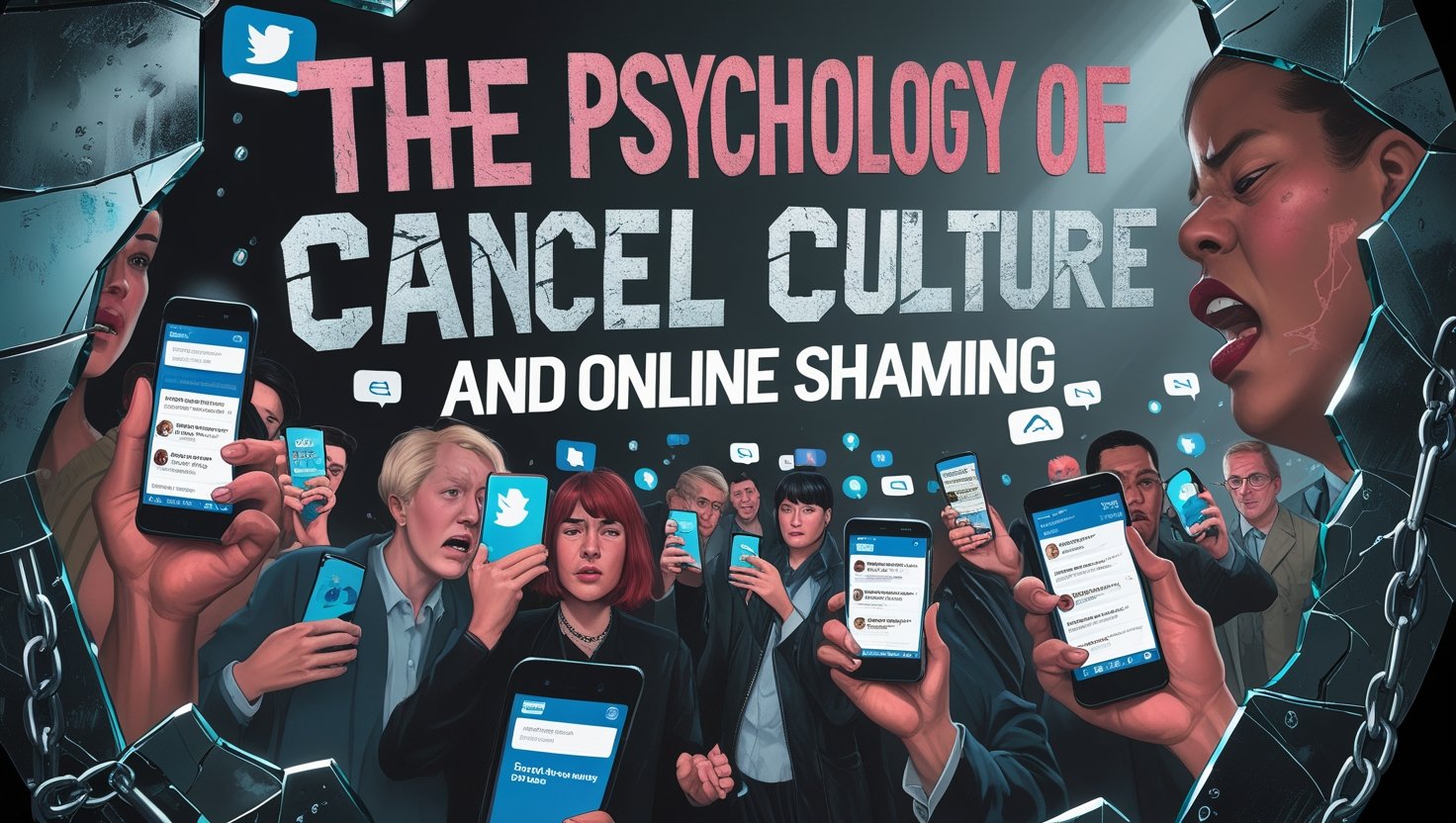
Cancel culture is one such social trend that has come to the fore with great force in the digital world. It means that if a person says something that is not liked by society or a group, then people publicly shame that person, boycott them, and try to destroy their reputation. This culture has developed through social media where people put collective pressure on a celebrity, influencer, or a common person by taking their old or new statements. The psychological angle of cancel culture is very deep because in it, people feel morally superior when they publicly “cancel” someone else. But the question is whether this is done only for justice or just for attention and power?
In today’s digital generation, every person has the power of social media, and when this power is unchecked, people quickly ruin the life of someone by calling them wrong. This trend is not just limited to celebrities, but students, professionals, and people of every level have become a symbol of this culture. This blog will try to understand the psychology behind why people reject someone, what satisfaction they get from this, and how all this affects the digital society.
2. The Psychology behind Public Shaming:
Public shaming, i.e., humiliating someone in front of everyone, is an old social practice that has now come in a new form through online platforms. If seen psychologically, humans have always been social animals who have made their own rules and punished those who broke those rules. Earlier, this punishment used to be physical or social isolation, but now it has become digital shaming. When someone is rejected online, people express collective anger, and this anger makes them feel it on a moral high ground. Another psychological factor of this is that people adopt this method to vent their frustrations and insecurities on others.
They say that they are doing something good for society when they expose some wrong deed, but in reality, they are venting their emotions. Groupthink also plays an important role where the thinking of a group dominates the thinking of every individual. People do not think about what they are doing; they just follow the group. This kind of behaviour gives rise to mass hysteria. When people publicly shame someone, they are seeking social approval and trying to strengthen their identity. All this revolves around the psychological need for belonging and power.
3. Why People Participate in Online Shaming
Why do people take part in online shaming?
This question helps in understanding a very important aspect of psychology. Often, when people criticise or reject someone on social media, there are many psychological reasons behind it. The first reason is a moral outrage, where someone’s statement or action hurts their values, and they express their anger. The second factor is peer validation, i.e., an attempt to get accepted in one’s social circle. When rejecting someone becomes a trend, people also become a part of that trend and feel that they are socially conscious. Group behaviour, i.e., herd mentality, also works here, where people judge someone just because everyone is doing the same. Another psychological motive is self-righteousness, where people think that they are morally right and they must expose the wrong person.
Sometimes this behaviour is also the result of revenge or jealousy. When people highlight someone else’s weakness, they feel more powerful. Social media has amplified this behaviour because there is a system of anonymity and instant reaction. People think that their action will not make any difference, but when thousands of people do the same thing, a digital mob is created. In this process, both accountability and empathy are lost.
4. The Emotional and Psychological Impact on the Target:
When someone is shamed or rejected online, they experience not just social but also deep emotional and psychological effects. People often don’t realize the impact their one comment, share, or reaction can have on someone’s mental health. The person who is targeted begins to feel anxiety, shame, guilt, and isolation. They judge themselves all the time, doubt their identity, and suffer from social withdrawal. In some cases, this online humiliation can lead to depression and PTSD. When you feel that the whole world is against you, both your sense of safety and self-worth are disturbed.
These effects are not just limited to celebrities, but students, teachers, professionals, and ordinary people can also become victims of it. Career damage, the breaking of relationships, and loss of personal identity all become trauma for that person. Mental health experts say that the pressure of online shaming is more intense than real-life bullying because it is always on record online and can come out again and again. This kind of digital violence makes long-term psychological healing difficult. People lose trust and become closed off from themselves. It is important to understand that behind every online action, there is a person’s heart and mind, which can be deeply hurt.
5. Cancel Culture vs. Accountability: Where’s the Line?
Often, people consider cancel culture and accountability as the same thing, but in reality, there is a difference between the two. Accountability means answering a person for their actions, but with human dignity. When this answer is given in cancel culture, it is through humiliation, public shame, and career destruction. Accountability is constructive, while cancel culture becomes destructive. When someone has made a mistake, they should be allowed to improve, but in cancel culture, no opportunity is given; there is only punishment. All this becomes even more dangerous when the facts are not clear, but people still target someone in reaction. Online mob mentality does not give people time to think.
Every person becomes a judge, and every comment becomes a digital stone that falls on someone’s life. Accountability has empathy and reform, while cancel culture has only rage and exclusion. According to psychology, when someone is given a chance to improve then he genuinely changes his behavior, but when he has to face shame and boycott then he either rebels or emotionally collapses. It is important to understand that criticizing someone and digitally “killing” someone are two different concepts. Society will have to decide whether we want justice or just instant revenge.
Conclusion:
In today’s digital era, everyone has the power to make someone viral or cancel them. But if this power is not used with understanding and empathy, it becomes destructive. Cancel culture has replaced accountability, and now people first judge, then think. Everyone has a past, and everyone can make mistakes. But if the answer to every mistake is public humiliation, society will never progress. We will have to understand that even in the digital world, human emotions and mental health have value. Educating someone, giving him a chance for reform, and having a fair discussion is more powerful than publicly destroying someone. Behind every tweet or post, there is a person with a mind, heart, and emotions.
If we start considering every mistake worthy of cancelling it, then where will the request for forgiveness and growth remain? Society will have to move towards such online behavior where there is compassion along with accountability. We will have to decide whether we want a better and more conscious digital community or just run behind the viral outrage. Understanding the cancel culture and raising questions on it is the first step towards a healthier social space where people can learn and also improve.
FAQs:
1. What is cancel culture, and how does it work in the digital world?
Cancel culture refers to the social practice of publicly shaming and boycotting someone, often online for something they said or did that others find offensive. It usually starts on social media, where users call out a person’s behavior, leading to a loss of reputation, opportunities, or even livelihood. Unlike traditional forms of accountability, cancel culture often involves immediate judgment without due process or room for growth.
2. Why do people feel compelled to participate in online shaming?
People engage in online shaming for multiple psychological reasons. These include moral outrage, the desire to fit in with a group, feelings of superiority, or even revenge and jealousy. Participating in such behavior can give individuals a sense of power or validation, especially when supported by likes and comments. Social media amplifies this through anonymity and instant feedback, turning isolated criticisms into viral attacks.
3. What are the emotional and psychological effects on those who are “cancelled”?
The targets of cancel culture can suffer severe emotional distress. They may experience anxiety, depression, shame, and social isolation. In extreme cases, it can lead to PTSD or long-term identity issues. Unlike real-life bullying, online shaming is permanent and searchable, making the trauma ongoing. The effects are not limited to celebrities; students, teachers, and everyday people can be deeply harmed.
4. How is cancel culture different from accountability?
Accountability involves holding someone responsible constructively and respectfully, allowing space for understanding, growth, and change. Cancel culture, by contrast, is often punitive and driven by anger. It tends to shut down conversation rather than promote reform. In cancel culture, mistakes are met with career destruction and social exile, rather than with opportunities for learning or redemption.
5. What can society do to create a healthier digital environment?
To create a more balanced online culture, people need to prioritize empathy, context, and open dialogue. Recognizing that everyone makes mistakes and deserves a chance to grow is essential. Instead of instantly cancelling someone, encouraging education, discussion, and reflection can lead to more meaningful change. Society must ask whether it wants instant punishment or long-term progress rooted in compassion and fairness.