Often, people ignore their bank statement, considering it a mere paper or just keep it after checking the balance, whereas in reality, this statement is the most important part of your financial record for the entire month. In the bank statement, you get to know how much money you deposited in your account, how much you withdrew, and on what things you spent it on. If you do not check it regularly, then you do not know whether any wrong transaction has taken place or the bank has deducted any extra charges. Many people go and check the statement only when there is a fraud or error. If this habit gets changed, then you would be unaware of any mistake. You can get it on time and complain. By reading and understanding the bank statement, you also get control over your expenses.
You get to know where you are wasting your money and where you can save it. In this way, you can improve your budget. The purpose of this introduction is that every person should understand that a bank statement is not just an account of accounts, but it is a part of your money security and planning. Therefore, it should be read in detail every month and have complete control over your money.
Key Sections of a Bank Statement:
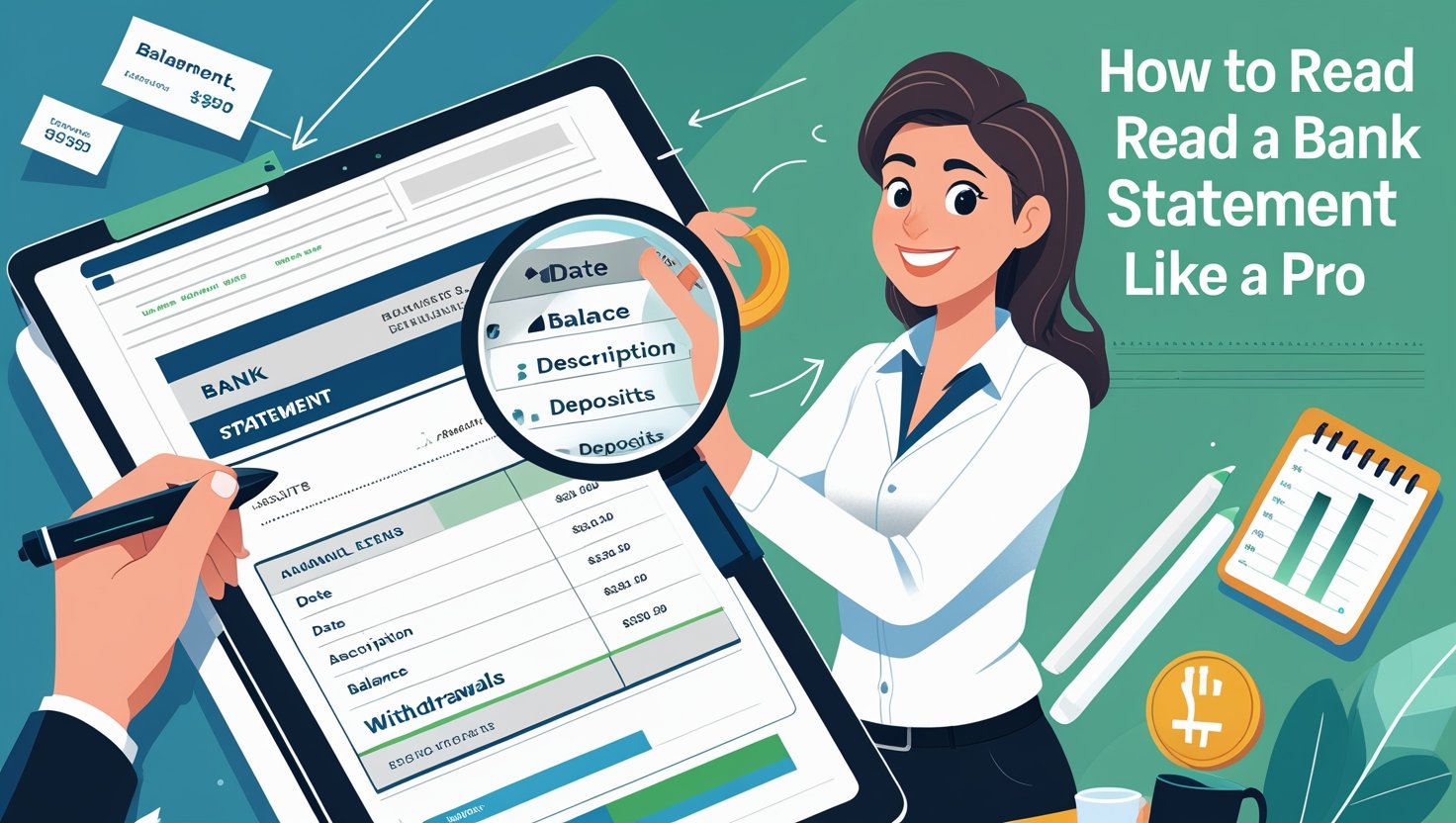
When you open a bank statement, first of all, you should understand what is in it so that you can see everything in the right way. First of all, there is an account summary. In this, you get to know how much balance was there in your account at the beginning of the month and how much remained at the end. Then there is a transaction history that tells in detail how much money came in or went out on which day. In this deposit, i.e., money that came into the account, and withdrawals, i.e., money that was taken out, are all shown. Apart from these charges are also written, like ATM charges or online transfer fees.
Sometimes, there is also interest that is charged by the bank. It is important to see whether the bank charges you the overdraft fees or deducts them overdraft. Apart from this, there are also important dates like the period of the statement, i.e., from which date to which date the statement is made, and if there is any due payment, then its date is also written. It is important to understand all these things so that there is no confusion. If you do not understand the meaning of anything, you should contact the bank so that you can manage your money by understanding each section. This way, you will not suffer any loss due to any hidden charges or wrong transactions.
How to Spot Errors and Unauthorized Transactions:
Nowadays, fraud has become very common, and sometimes even banks make mistakes. That is why you should check the bank statement in detail. You should look at every transaction and think whether I withdrew this money or spent it. If any such money is withdrawn that you do not remember, then contact the bank immediately. Sometimes in online shopping, the card details reach the wrong people, and they deduct small amounts that you do not notice. Similarly, sometimes more money is deducted from the ATM, or a double transaction takes place, which is a m
istake. If you check the monthly statement, you will notice every error. You can check the transaction quickly and get your money back by filing a complaint. If you look carefully, even the bank does not accept the complaint.
Therefore, it is important to look into it quickly and take action. If you feel that any transaction is fake, then submit a written complaint to the bank and submit the necessary documents so that your case can be solved quickly and the money can be recovered. The purpose of this section is that you should check each statement seriously and if you find something wrong, then do not sit quietly but take immediate action so that your money is safe.
Using Your Bank Statement for Better Budgeting
A bank statement is not just for checking or finding errors; rather, it helps a lot in your budgeting. When you see the statement every month, you understand how much you spent on what. For example, if you feel that the money will run out soon, you can check by looking at the statement whether unnecessary shopping is happening or whether the daily small expenses are adding up to a big amount. If you keep all this written down, then next time you can make your budget realistic.
You also get to know this from the bank statement. It is known which bills are getting auto deducted, and if any old subscription is not active that you are not using. With the help of a statement, you can make a savings plan as to how much money to keep aside every month. In this way, you can balance your income and expenses. Using a bank statement in budgeting teaches you discipline and reduces financial stress. Hence, every person should analyse their expenses through the statement and separate necessary and unnecessary expenses so that they can save more.
Tips to Read Statements Efficiently:
Often, people say that reading bank statements is a boring job or that they are not understandable, but if you follow some small tips, then this work can become very easy. First of all, always keep your statements organized. If you read your statements online, then make a PDF of them and save it in a separate folder so that you can get it quickly when needed. If you keep paper statements, then make files and keep them month-wise so that old transactions can be compared. Secondly, use an app or an Excel sheet so that you can easily track your expenses. Keep a fixed day every month when you can read the entire statement calmly and tick every transaction. Do it and confirm.
If you have any doubts, then ask the bank on that very day. Make it a habit to read the statement so that there is no major problem in the end. Reading the bank statement not only detects fraud but also helps you understand your financial health. The sooner you understand this, the more your money will be safe and your budget will be in control. So, make a statement reading a part of your routine.
Protecting Your Bank Information:
These days, fraud through online banking has increased a lot. Therefore, it is very important to keep your bank statement and account information safe. If you download the statement online, keep it in a safe folder with a password. Do not forward the statement to anyone via email. Do not share your bank account details on social media or unverified websites unless it is necessary. To avoid phishing scams, always keep a close eye on bank-related emails. If you get any suspicious link, do not click on it. Often, fraudsters use the name of the bank to send fake emails that try to steal your data.
If you have any doubts, confirm with the bank’s helpline when you go to the ATM. If you use it, check the machine to ensure there is no chip attached or anything suspicious Keep your debit or credit card in a secure place at all times and in case it is lost, get it blocked immediately Do not throw away bank statements when they are old Shred them so that no one gets the data These simple habits can save you from incurring a huge loss.
Conclusion:
Nowadays, when everything has gone online, it has become even more important to keep an eye on money. Ignoring a bank statement or checking without understanding can cause you losses due to small mistakes. That is why every person should understand the statement carefully every month and plan their budget accordingly. By reading the statement, you get to know how your expenses are going and whether money is being wasted on useless things. Apart from this, you can avoid fraud and unauthorized transactions. If you check regularly, you can recover even wrong charges from the bank.
You can do this, and if any problem arises, then the solution will be found on time. In the end, I will just say that you should not consider your bank statement as just a paper, but consider it as a road map of your money, and check it every month. This will help you avoid financial stress, and you can make better plans for your future. Taking out some time every month and checking the statement will benefit you a lot in the long term, and you will become the owner of your own money.
FAQs:
- Why is it important to read a bank statement regularly?
Reading your bank statement regularly helps you track your income and spending, catch any errors or unauthorized transactions early, and manage your budget better. Ignoring it can lead to unnoticed fraud, extra charges, and poor financial planning. - What are the main sections of a bank statement?
A bank statement usually has an account summary showing your opening and closing balance, a transaction history listing deposits and withdrawals, details of any bank charges or interest, and important dates like the statement period or due payments. - How can I spot errors or fraud in my bank statement?
Check every transaction to see if you actually made that payment or withdrawal. If you see an unknown or suspicious charge, contact your bank immediately and submit a complaint with proof. Acting fast helps you recover your money and prevents bigger losses. - How can my bank statement help with budgeting?
By analyzing your statement, you can see exactly where your money goes, identify unnecessary expenses, plan savings, track subscriptions, and adjust your budget for better control over your income and spending. - How do I keep my bank statements and information safe?
Always store online statements in a password-protected folder, never share account details carelessly, beware of phishing emails, check ATMs for any tampering, and shred old paper statements instead of throwing them away. These habits protect you from fraud and data theft.