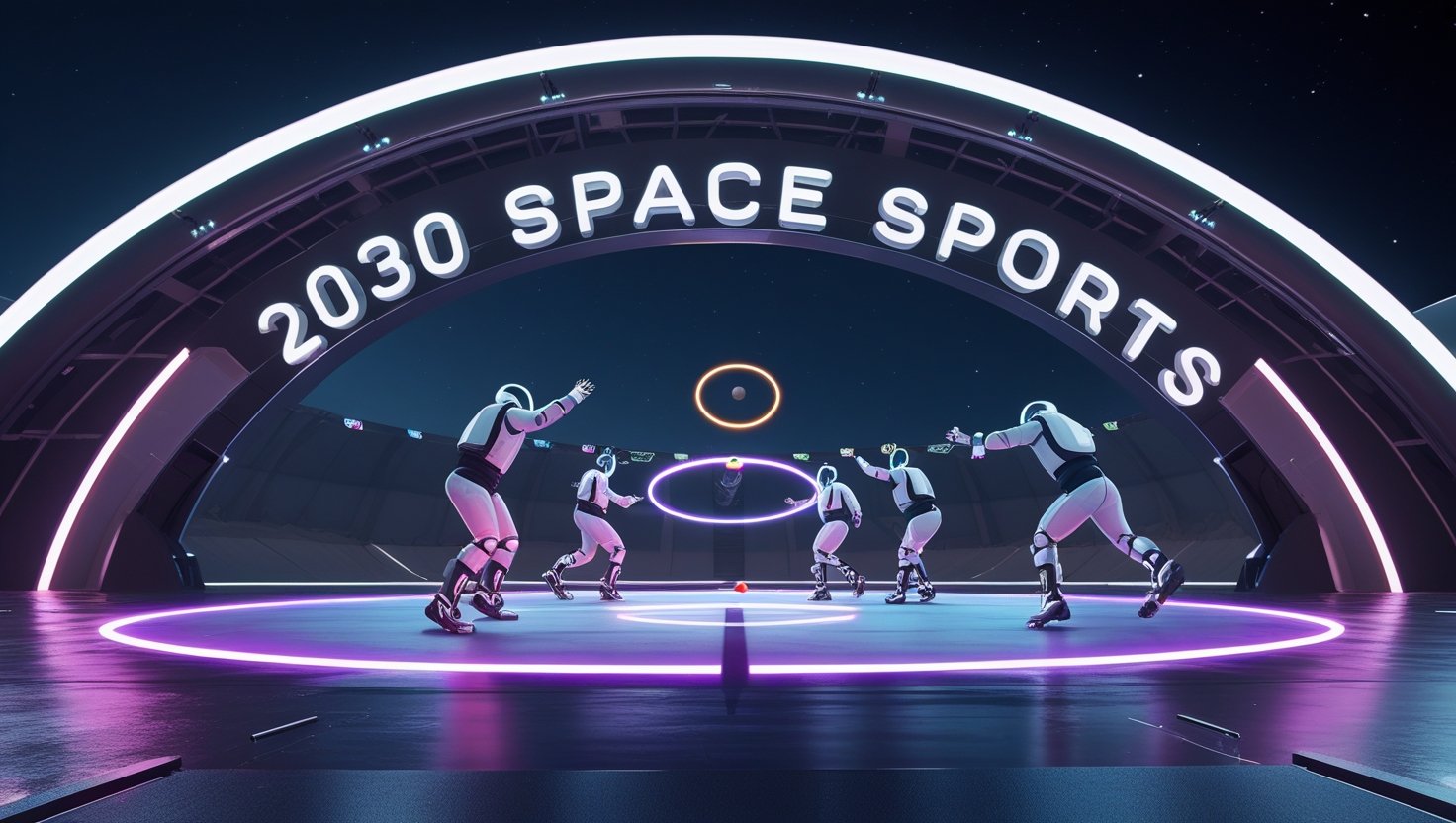
Imagine a world where gravity no longer limits human achievement, a realm where every jump, throw, and sprint defies Earth’s pull. 2030 Space Sports are quickly emerging as the playground for the bold, transforming traditional competitive spirit into something truly cosmic. Step into this exhilarating evolution and discover why zero-gravity athletics is set to revolutionize the future of sports.
Defying Earth’s Limits: The Dawn of 2030 Space Sports:
In the not-so-distant future, sports will no longer be confined to terrestrial arenas. Instead, visionary pioneers are embracing competitions that take place in the vast expanse of space. By 2030, athletes and enthusiasts are preparing to take part in events that shift the lens of athleticism to a whole new dimension. The idea is simple yet groundbreaking: remove the relentless pull of gravity, and watch human potential soar.
Space sports are more than a novelty; they represent a dramatic reinvention of competitive experiences. In orbiting arenas or specially engineered zero-gravity domes, everyday movements are transformed into elaborate ballets of kinetic energy and skill. The rules are evolving along with the environment—traditional moves must be reimagined when your body floats with minimal resistance, and strategies are adjusted to account for a medium where momentum is king. As 2030 Space Sports quickly gain traction, athletes, engineers, and spectators alike are captivated by this blend of science, sport, and sheer audacity.
The Weightless World of Zero-Gravity Athletics:
When gravity is no longer the primary force at play, the dynamics of movement change in astonishing ways. In this weightless world, every competitive endeavor, whether it’s a high-stakes race or a strategic team match, requires a completely new set of skills. Athletes must learn to control their momentum, timing, and spatial awareness in ways that were once unimaginable on Earth.
Gone are the days when a simple jump was measured by how high one could go. Instead, in zero-gravity athletics, each movement involves a complex interplay between inertia and precise thrust. Training regimens are being overhauled to focus not just on physical strength, but on neuroscientific conditioning, spatial orientation training, and even psychological adaptation to isolation and unpredictability. Coaches and sports scientists are collaborating more than ever to redefine performance norms, turning gravity’s absence into a canvas for infinite athletic creativity.
Technological Innovations:
At the heart of this athletic renaissance lies an unprecedented wave of technological innovation. Cutting-edge equipment, ranging from adaptive athletic gear to revolutionary propulsion devices, is enabling athletes to push the boundaries of performance in zero gravity. For instance, specially engineered suits embedded with micro-sensors provide real-time feedback on an athlete’s body mechanics, ensuring that every twist and momentum shift is recorded and optimized.
Moreover, arenas for 2030 Space Sports are being built with advanced materials that mimic the vacuum of space while offering controlled environments for safe competition. Interactive training modules, powered by augmented reality and machine learning, allow athletes to simulate countless scenarios, helping them perfect their moves before they even leave the ground. As innovations continue to drive this sport forward, the blend of technology and human capability promises to redefine what is physically achievable in a world without gravity.
Training Beyond Earth:
Traditional sports training is all about repetition, strength, and endurance, qualities that are being reexamined under the demands of zero-gravity conditions. To succeed in zero-gravity athletics, athletes must undergo rigorous preparation in simulators that replicate the space environment. These advanced training centers use a mix of virtual-reality systems and physical apparatus that mimic the absence of gravity, forcing athletes to adapt their skills to a medium where Newton’s laws are rewritten.
The new protocols go beyond mere muscle memory. Mental acuity, balance, and the ability to synchronize with team members in three-dimensional space are essential. Training programs are incorporating elements from disciplines as diverse as ballet, martial arts, and even drone piloting. This multidisciplinary approach not only sharpens the athletes’ physical responses but also enhances their cognitive flexibility, transforming how sports are played and perceived on Earth and in space. With every drill designed for precision and adaptability, the future of athletics is set to become as much a technological spectacle as it is a human one.
The Cultural Shift: Embracing a Galactic Sports Era:
With every revolutionary shift in sports comes a transformation in culture, and the rise of 2030 Space Sports is no exception. Fans and enthusiasts are already captivated by the novelty and excitement of weightless competition. Social media is abuzz with teasers of gravity-defying stunts and behind-the-scenes peeks into the rigorous training regimens of space athletes.
This cultural shift goes beyond mere entertainment; it represents a new evolutionary stage in human aspiration. As space travel becomes more accessible, the inclusion of space sports in mainstream media is starting to reshape global perceptions of athletic excellence. Traditional leagues and competitions on Earth may find themselves competing for attention with events broadcast live from futuristic space stations. The enthusiasm around these futuristic athletic events also sparks conversations about sustainability, international cooperation, and even the ethical dimensions of exploiting space for entertainment. In essence, zero-gravity athletics is not just a sport, it’s a movement that redefines how we view human achievement in the cosmos.
Overcoming Challenges:
While the promise of space sports shines brightly, it is not without its formidable challenges. The technological marvels enabling these competitions come with high costs and steep learning curves. For starters, establishing secure and sustainable venues in space or near-space environments requires massive investments in both infrastructure and R&D. Even small-scale errors in simulation or equipment design can lead to injuries or disruptions, requiring rigorous testing and continual adjustments.
Furthermore, the physical demands on athletes are different from those experienced on Earth. The human body is finely tuned to deal with gravity, and sudden shifts to a weightless environment can induce disorientation or other physiological stresses. Regulatory bodies and sports organizations are working hand in hand with medical experts to devise protocols that ensure athlete safety without stifling the innovation these sports promise. Despite these hurdles, the spirit of adventure and relentless drive for excellence push the industry to overcome any obstacle. As these challenges are met head-on, the evolution of 2030 Space Sports remains a symbol of humanity’s unyielding determination to reach further into the universe.
Economic Impact:
The economic potential of space sports is launching industries into previously uncharted markets. As zero-gravity athletics draw public and investor interest, they are setting the stage for a new era in sports entertainment. Sponsorships, broadcasting rights, and merchandise are already emerging as significant revenue streams, with brands eager to associate with the thrill and futuristic appeal of space sports.
E-commerce platforms and digital marketplaces are capitalizing on the trend by offering everything from custom-designed gear to exclusive behind-the-scenes digital content. The broad appeal of these sports is also fostering international partnerships, expanding the traditional boundaries of sports franchises. Regulatory frameworks for these emerging markets are evolving alongside the industry, ensuring that economic activities remain sustainable and ethically managed. As industries pivot towards this burgeoning field, the creation of new job opportunities, from technical specialists to creative digital content producers, further underscores the ripple effect that 2030 Space Sports has on the global economy.
Charting Infinite Possibilities:
Looking ahead, the domain of space sports promises to be an ever-expanding frontier, full of untapped potential and continuous innovation. With emerging technologies like artificial intelligence, virtual reality, and advanced robotics integrated into training and competition, the landscape of zero-gravity athletics is set to mature into a highly sophisticated ecosystem. Enthusiasts and experts predict that future iterations of space sports will incorporate hybrid models of competition, blending elements of simulation-based gaming with physical athletic performance, to create immersive experiences that captivate audiences worldwide.
Moreover, this evolutionary journey is inspiring new scientific research into the effects of prolonged space exposure on the human body. Insights gained from space sports are already influencing other fields, including health, aerospace engineering, and even urban planning. As humanity looks to create sustainable colonies on other planets, the innovations born from zero-gravity competitions could very well form the cornerstone of future athletic and recreational activities in space. In short, 2030 Space Sports is not merely reimagining how we play; it’s charting a course toward a future where the limits of athletic excellence are confined only by the breadth of our imagination.
Conclusion:
2030 Space Sports embodies the thrill of exploration and the promise of athletic innovation, all in a weightless environment. Enjoy the evolution as it reshapes sports and inspires new horizons.
FAQs:
- What are 2030 Space Sports?
They are competitive events held in environments with negligible gravity. - How do zero-gravity athletics differ from traditional sports?
They require entirely new techniques when the pull of Earth is absent. - What role does technology play in space sports?
Advanced gear and smart arenas are essential for safe, competitive play. - How do athletes train for competitions in weightlessness?
They train in simulators and specialized facilities that mimic space conditions. - What challenges do space sports face?
High costs, safety concerns, and adaptation to an unconventional environment are key challenges. - Can zero-gravity athletics become mainstream?
With growing economic and cultural interest, mainstream adoption seems likely.